

Ultrasonic Fabric Cutting Machine | No Fray, No Burn, High-efficiency Textile Cutting Solution
For textile factories, garment workshops, non-woven product manufacturers and fabric processing enterprises worldwide, traditional fabric cutting methods have long been unavoidable production pain points. Mechanical blade cutting causes loose thread, frayed edges and secondary trimming work; hot knife cutting brings burnt edges, fabric hardening, yellowing marks and material adhesion; laser cutting has high energy consumption, strict dust-proof requirements and high later maintenance costs. If you are struggling with defective products, high labor costs, low cutting efficiency and extra edge-sewing procedures, our industrial ultrasonic fabric cutting machine is your ultimate upgraded cutting equipment for all flexible synthetic fabrics.
What Is Ultrasonic Fabric Cutting Technology?
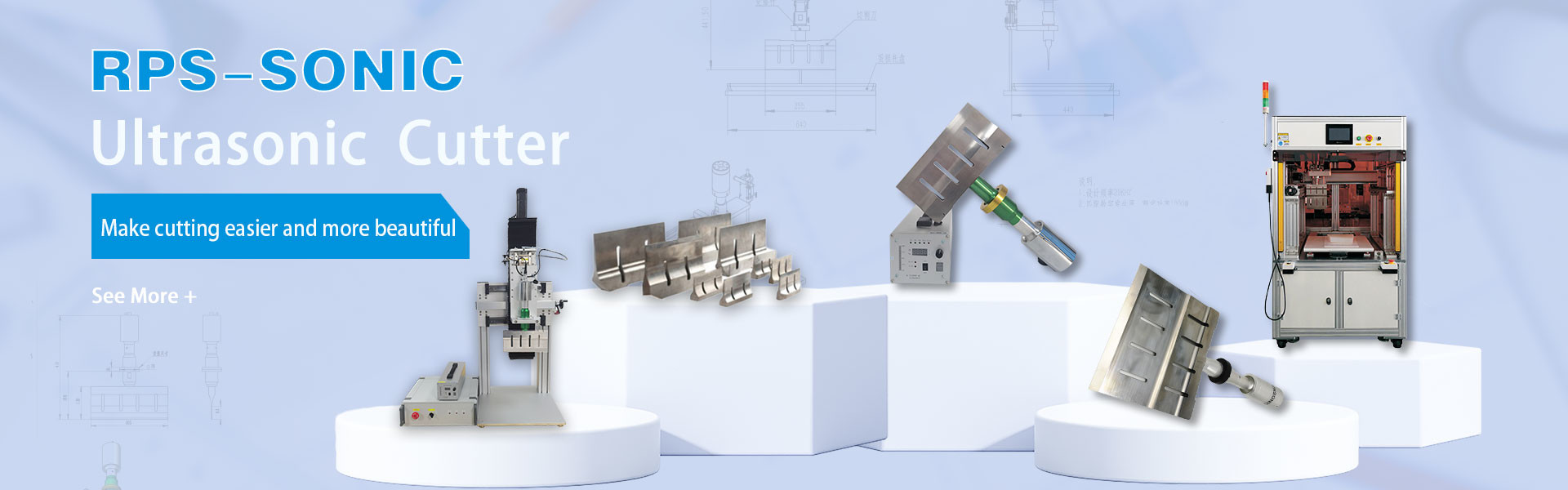
Different from physical blade cutting and constant high-temperature thermal cutting, this cutting machine adopts high-frequency ultrasonic vibration technology (20kHz standard industrial ultrasonic frequency). The ultrasonic generator converts electric energy into high-speed mechanical vibration energy. When the ultrasonic cutter head contacts fabric surface, instant local friction heat melts fabric fiber edges in milliseconds. It realizes one-step cutting & edge sealing integration without external heating, open flame or high-temperature baking. The whole cutting process is fast, stable and low-temperature, which will not damage the complete structure and original performance of raw fabrics.
Core Competitive Advantages of Ultrasonic Fabric Cutting Machine
1. Integrated Cutting & Edge Sealing, Zero Fray & Loose Thread
This is the biggest advantage over traditional cutting machines. Ultrasonic vibration fuses fabric fiber edges instantly while cutting. All cut edges are compact, smooth and closed completely. No yarn shedding, no unraveling, no edge splitting. Most fabric products eliminate overlocking, sewing edge and edge finishing procedures directly, cutting down 30%-50% post-processing labor workload and production cycle time greatly.
2. Clean Cutting Edge, No Burn, No Yellowing, No Fabric Deformation
Traditional hot knife heats the whole cutter continuously, leading to hard, brittle, blackened cutting edges, which ruins high-grade fabric appearance. Ultrasonic heat only generates on the tiny contact cutting point, with ultra-small heat radiation range. It will not scorch fabric surface, damage printed patterns, waterproof coating, composite glue layer and elastic fiber structure. Soft fabric texture remains unchanged after cutting, qualified for high-standard finished product inspection and export order standards.
3. High Cutting Precision & Ultra-narrow Cutting Kerf, Lower Material Waste
Equipped with servo motor drive, digital control positioning system and customized alloy ultrasonic cutter head, the machine supports customized fixed-size cutting, continuous rolling cutting and shaped cutting. Cutting error is controlled within ±0.1mm, perfect for batch standardized production. The ultra-thin cutting seam reduces fabric loss during typesetting and cutting, maximizing fabric utilization rate and saving raw material procurement cost for long-term mass production.
4. Ultra-wide Material Compatibility, Multi-scene Universal Cutting
Not limited to single cloth material, the machine fits almost all thermoplastic synthetic fabrics and mixed textiles: non-woven fabric, spunbond fabric, melt-blown fabric, polyester, nylon, oxford cloth, chiffon, elastic knitted fabric, spandex fabric, needle punched cotton, adhesive hook and loop, elastic band, webbing strap, coated waterproof fabric, sound-absorbing cotton, carpet fabric and composite laminated fabric. No need to replace cutter parts frequently for different materials, one machine meets all workshop cutting demands.
5. Energy-saving, Stable Operation & Low Later Maintenance Cost
Compared with constant heating hot cutters and high-power laser cutters, ultrasonic equipment works with intermittent vibration energy consumption, saving 40% daily industrial power consumption. The hardened ultrasonic cutter head features wear resistance, anti-adhesion and long service life, no frequent sharpening, cutter replacement and consumable purchase. The intelligent ultrasonic self-check system automatically adjusts vibration frequency to avoid cutter stuck and material damage. Failures rarely occur during 24h continuous industrial working, only daily simple cleaning required for maintenance.
6. Safe & Easy Operation, Low Worker Threshold
Full closed protective cutter design avoids cutting injury risk. Human-machine touch screen control panel supports preset cutting size, speed and vibration parameters. New operators can master operation within 30-minute simple training. No professional textile cutting technology is required, helping factories solve skilled worker shortage problems effectively.
7. Low Working Noise, Eco-friendly Production
The whole cutting process produces no toxic smoke, peculiar burning odor or fiber dust, meeting EU environmental production standards and factory workshop safety regulations. Low running noise will not affect workshop working environment, compliant with export factory audit requirements.
Main Application Industries & Cutting Products
1. Apparel & Garment Manufacturing Industry
Suitable for sportswear, swimwear, underwear, elastic garment fabric cutting, clothing woven label, size label cutting, garment elastic band, hook-and-loop fastener, binding tape cutting. Uniform cut pieces improve garment stitching efficiency, upgrade finished clothing grade, suitable for high-end clothing OEM export production.
2. Disposable Non-woven Hygiene Products Industry
Core processing equipment for medical and daily disposable supplies: disposable face mask ear loop, isolation gown fabric, medical bed sheet, shoe cover, disposable cleaning wipe, beauty facial towel, pet cleaning pad cutting. Sealed cutting edges are dust-free, bacteria-isolated, fully meet medical hygiene and food-grade product production standards.
3. Home Textile & Soft Decoration Industry
Wide-width curtain fabric, sofa cloth, pillow outer fabric, tablecloth, dining mat, household carpet, lace edging cutting. Support large roll continuous automatic cutting, eliminate manual edge trimming, greatly improve home textile finished product aesthetics.
4. Luggage, Footwear & Accessories Industry
Shoe lining fabric, shoe upper composite cloth, luggage inner cloth, backpack webbing, luggage binding strip, leather composite fabric cutting. Neat sealed edges prevent inner fabric layer peeling, enhance accessory durability.
5. Industrial Filter & Functional Fabric Industry
Industrial filter nonwoven fabric, waterproof breathable composite fabric, automotive interior sound insulation cotton, automotive roof cloth, industrial packaging fabric cutting. Ultrasonic integrated cutting keeps composite fabric layered structure intact, guarantees functional performance of industrial fabrics.
6. Craft & Gift Textile Industry
Decorative ribbon, festival cloth ornament, handmade fabric piece, embroidery backing fabric customized shaped cutting, perfect for small-batch customized craft processing.
Why Choose Our Ultrasonic Fabric Cutting Machine?
1. Customized model optional: desktop small model for laboratory & small workshop, rolling automatic large model for mass industrial production;
2. Global after-sales support: English version operation system, overseas remote debugging, one-year core parts warranty;
3. ROI improvement: Cut labor cost, defective rate, material loss and consumable cost comprehensively, help textile processing factories expand profit margin rapidly;
4. Export standard quality: CE certified, full compliance with European, American and Southeast Asia industrial production standards.
Upgrade your fabric cutting production line from traditional cumbersome processing to efficient ultrasonic intelligent cutting now. Reduce production troubles, stabilize product quality and win more bulk export orders effortlessly!
Applications of ultrasonic homogenization in the pharmaceutical industry
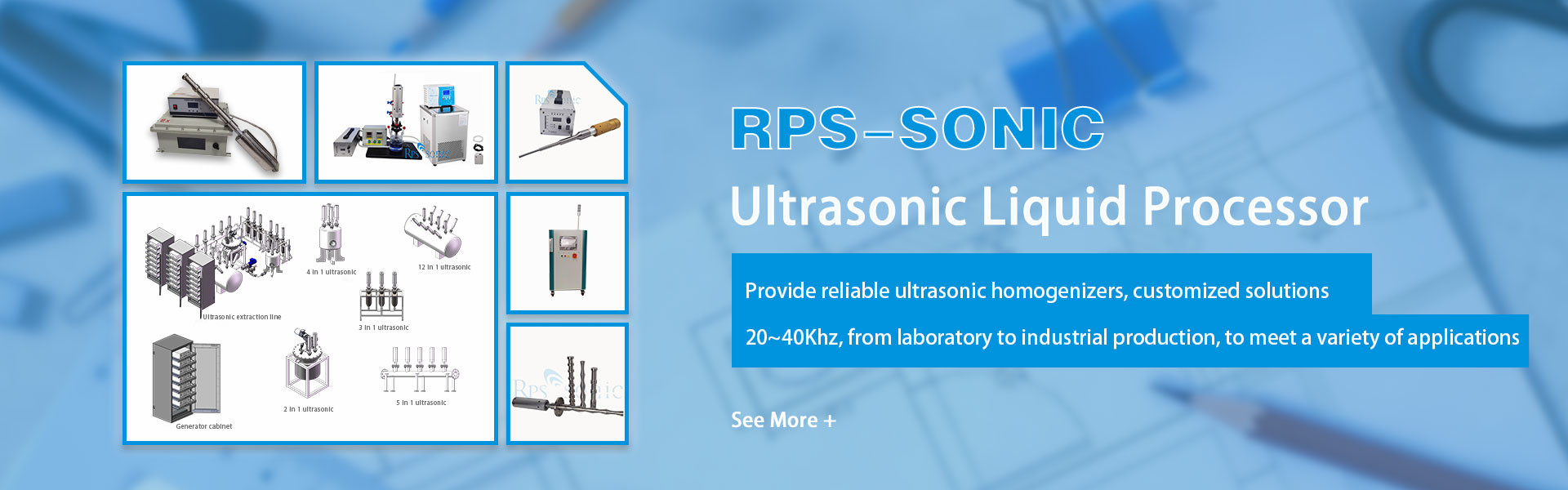
In the pharmaceutical industry's transformation towards green and precision manufacturing, ultrasonic homogenization technology, with its unique physical effects, has overcome many bottlenecks in traditional processes, becoming a key technological means in drug research and production. This technology uses high-frequency ultrasound to induce cavitation, mechanical shearing, and turbulent disturbances, creating a localized high-temperature, high-pressure microenvironment in a liquid medium. This achieves material refinement, dispersion, emulsification, and cell disruption, possessing the core advantages of high efficiency, gentleness, and controllability.
Core Application Scenarios
I. Extraction and Separation of Active Ingredients
In the production of herbal and biopharmaceutical drugs, ultrasonic homogenization technology significantly optimizes the extraction efficiency of active ingredients. Addressing the problems of time-consuming and high component loss associated with traditional boiling and alcohol precipitation methods, ultrasound can rapidly disrupt plant cell walls or microbial cell membranes through cavitation, accelerating solvent penetration and component release. Extraction time is reduced to less than one-third of traditional processes, and the yield of active ingredients is increased by more than 30%. Whether extracting polysaccharides from Ganoderma lucidum spores or separating recombinant proteins from E. coli, this technology preserves component activity under gentle conditions, avoiding contamination from added chemical reagents and laying the foundation for subsequent purification processes.
II. Preparation of Novel Drug Formulations
In the development of novel formulations such as nano-formulations, liposomes, and nasal sprays, ultrasonic homogenization is a core tool for achieving precise formulation. By breaking up particle agglomerates through strong shear force, uniform particle size and high stability nano-dispersion systems can be prepared, significantly improving the dissolution rate and bioavailability of poorly soluble drugs. For example, in the production of nasal spray formulations for COVID-19 prevention, ultrasonic emulsification technology can construct micro- and nano-scale dispersed phases, enhance drug adsorption capacity and retention time on mucous membranes, and improve antibacterial effects; in anticancer drug formulations, it can control drug particle size to below the micrometer level, helping drugs penetrate tumor tissue and improve treatment precision.
III. Key Aspects of Vaccine Production
Ultrasonic homogenization plays a crucial role in the entire vaccine preparation process. In the antigen extraction stage, it gently breaks down viral or bacterial cells, efficiently releasing intracellular substances such as proteins and antigens while maximizing antigen activity. In the formulation stage, it achieves uniform dispersion of aluminum-based adjuvants and antigens, preventing aggregation that could affect immunization efficacy. Simultaneously, it can be used for pathogen inactivation, emulsification, and degassing in vaccine production, ensuring vaccine uniformity and safety and providing stable support for large-scale production.
IV. Aseptic Sieving and Impurity Removal
In the pharmaceutical micronized powder sieving process, ultrasonic homogenization technology effectively solves the problem of mesh clogging. By using a high-frequency ultrasonic transducer to resonate with the screen mesh to form a standing wave field, the micronized powder undergoes a jumping motion. For easily adherent materials such as vitamin C and the sieving throughput stability can be maintained above 98%, with a 75% reduction in residue. Compared to traditional airflow sieving, it reduces energy consumption by 65%, is suitable for fine sieving scenarios of 325 mesh and above, and can strictly ensure the purity and batch consistency of the formulation, meeting the quality control requirements of the pharmaceutical industry.